About Me

My photo
Harrisonburg, Virginia, United States
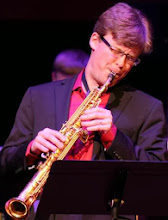
Professor of Saxophone, James Madison University

Thursday, December 19, 2019

Saxophone Gear and the True Source of the Sound

As an established professional musician and professor, I have the luxury of trying many different products, including some interesting prototypes.  I am committed to being the best musician that I can possibly be, and I have always enjoyed tinkering, so all the different tools and toys that have passed through my studio have helped me to learn a great deal about how things work, and something about human nature.

When I started my career, things were much simpler.  A serious saxophonist could choose a vintage horn, or a new model, but there were really only a few brands that were any good.  The same was true for mouthpieces and reeds. You had a few options for ligatures, and even fewer for neck straps. Saxophones were mostly made of brass and you used the neck that came with it, and the screws were generic.  Nobody had carbon fiber or cocobolo anything.

This is not to say that we didn’t mess around with gear.  Some folks were always chasing a Mark VI with a certain serial number, spending big bucks on the “Michael Brecker” mouthpiece, or discovering a boutique brand of reeds that they would briefly romance before moving on.  But that was usually just one or two people in a whole class of saxophonists, and they had to have the money to blow on risky, and often expensive experiments.

The 21st century ushered in a new age of affordable manufacturing and a democratized market for reaching customers.  We have so many choices, even within a certain brand. Selmer alone offers the Series II, Series III, and Reference horns, and more models of mouthpieces than I can remember.  I endorse RS Berkeley, a brand that I had never heard of until around ten years ago. I have several of their after-market necks, music medic pads and resonators, and boutique neck screws.  I have more mouthpieces and ligatures than I could ever use. I also have numerous tools to adjust reeds and to measure and reface mouthpieces. My “neck strap” doesn’t even touch my neck, thus the name “back strap.”

Some of this madness was self-induced by curiosity.  A number of products were given to me for testing, and I use quite a few of them with regularity.  I try to be as objective as possible by making recordings, taking measurements, and giving blind demonstrations to my peers.  I admit that sometimes a product makes me feel good, or it just looks cool. It is dangerous to go too far down that path, but I do believe in the “Dumbo’s feather” effect.  I am also willing to admit that not every cool product works, no matter how much I want to believe. So, what have I learned?

Music comes from the person.  Everything else is a tool, and you need the correct tool for the job at hand.  You don’t want to use a sledgehammer when the job calls for a soft mallet. For that reason, I tend to change mouthpieces and ligatures to best suit the musical situation.  There are very few tools that are universally useful. The only exception that I make is that I chose horns that will allow me to do everything, given the necessary modifications with mouthpieces and reeds.  The sound is always the most important thing, with ease of use coming in a close second. There are also many modifications that can be done DIY for very little cost. I have done some fine tuning on certain notes with cork crescents, and several of my students use “doughnut” mutes and have done the panty hose trick on their octave vents.


Although I tend to be pretty steady in the equipment that I use over time, there have been experiments that put new sounds in my mind.  I have carried those colors with me, regardless of the equipment that I use. There have also been a few eye-opening experiences with gear that brought permanent change.  (For example, I will never use a stretchy neck strap again, and I only use a conventional strap on soprano.) As long as the experimentation doesn’t get in the way of actual practice, the only real harm will be on your wallet.  Just remember that long tones and deep listening will do more for your musicianship than any fancy accessory. The music comes from you and it only passes through the machinery after you have created it in your mind!

Tuesday, October 22, 2019

My Lessons with Colgrass

   Michael Colgrass, the Pulitzer-winning composer, came into my life at a critical moment.  I was a young professor, desperately trying to prove myself while managing family life (I had a toddler at home and a baby on the way).  I was practicing myself into physical and mental injury on a regular basis, and those injuries had slowly leaked into my personal life at an alarming amount.

After performing Colgrass' "Urban Requiem" with extensive rehearsals under his supervision, he reached out to me when I was at an all-time low.  He recognized that I was sourcing my value as a human being entirely from my musicianship.  He introduced me to the following life-changing idea:

"Who you are" is separate from "what you do."

By self-identifying as "saxophonist," "teacher," or even "husband and father," I was failing to allow for the possibility that the self is transcendent from the roles that we play in our lives.  A good performance, a career accolade . . . none of these things make you a better person.  Even more critically, no amount of failure can reduce your worth as a person.  None.  Ever.

Michael gave me a copy of his book "My Lessons with Kumi."  I read it,  and I faithfully did the exercises in the first few chapters.  This completely changed the thoughts and behaviors that surround my work.  I began to rewrite the neural circuitry that was causing me to be unhealthy in my practice and performance.  I teach these methods to my students on a regular basis, with the understanding that they require regular, disciplined practice to take effect.


I stayed in touch with Michael over the years, letting him know how my practice was going, and telling him how grateful I was for his mentorship, even if it was long-distance and mostly through the book.  I wrote him once to tell him that I had used "squeeze fingers - bzzzzt" to center myself when my garage was flooding into my house during a torrential storm.  He congratulated me for finally mastering the technique to the point of being able to use it under severe stress.  It felt like I had completed my Jedi training, if only for a few moments.

My first experience with Michael's music was when I played bass clarinet on his "Winds of Nagual" at the University of Massachusetts, under Bill Rowell.  I had never even played bass before, and I struggled to play the part, but the music was transformative.  A decade later, I found myself working directly with the composer.  Michael Colgrass is now a part of my musical and teaching DNA.  He is also singularly responsible for teaching me to protect my true self from the ups and downs of my career.

In the 16 years since my first dance with his "Urban Requiem," I have meditated extensively on the lessons of that experience.  The biggest realization for me is that we must enjoy the process of preparation, and prepare as vigorously as possible.  Only then can we fearlessly throw ourselves into a performance.  By knowing myself as a person, and insulating my value from "what I do," I am able to safely risk everything in the concert.  The gift is that we can make ourselves vulnerable on the stage, to be completely open to our fellow musicians and to the audience.  "What we do" can reveal "who we are."

It is an honor to perform "Urban Requiem" once more, and this time with my incredible students.  It is my personal farewell to a man that gave me an immeasurable gift in my work, and in my life.  Rest well, Michael.  On Wednesday October 23, 2019, we will ring the bells for you.


Friday, May 10, 2019

Teaching Creative Interpretations of Baroque Repertoire

A number of years ago, I wrote a social media post seeking anyone that was teaching baroque style and making improvisation an integral part of the process.  The responses were varied and interesting, but fell short of finding any evidence that this is happening very often, if at all.

I took some time to approach the idea with my students, but I discovered that they lacked the background in harmonic-melodic theory to make good stylistic choices, but more importantly, they simply weren't familiar enough with the style to actually improvise in a meaningful way.  Much in the way that young musicians have difficulty making their improvisations sound like authentic jazz, it is impossible to be creative in the baroque style without having a deep knowledge that can only come from extensive critical listening and analysis.  With a little work, I was able to get a student to add a couple of his own ornaments on a Telemann sonata, but it wasn't exactly the level of creativity that I was aiming for.

Realizing that they key is listening, which should have been obvious to me from the beginning, I set out to find creative recordings of baroque flutists.  I became quite smitten with Mario Folena's virtuosic work with Festina Lente, so I decided to carefully study his recordings.  Their work on Giovani Platti's sonatas is particular creative.  You can find it here:


In the same way that I have studied jazz recordings, I spent many hours listening and transcribing.  I also listened to many other recordings of Platti and made notes on different interpretations, ornamentations, etc.  After several years, I felt ready to work up a new piece and apply some of things that I had learned.  I decided to learn the famous A minor Sonata for Unaccompanied Flute by C.P.E. Bach.  Of course, he is really associated with the Classical period, but I felt like this was a good vehicle for a creative interpretation, and I have always enjoyed hearing the piece performed by student flutists at James Madison University, where I teach.

Undoubtedly, so-called purists will criticize what I have done here, but I am pleased with this performance.  From an interpretative perspective, I purposely took some risks and threw caution to the wind.  For my purposes, this would only work if I allowed myself to be a little reckless, so I went for it.  Playing music that predates the invention of an instrument essentially negates an "authentic" performance anyway, so I tried to say something that relates to my musical experiences as a saxophonist. Rather than to drone on, you can listen to the third movement here:


Performing this in public gave me the confidence to begin teaching my students to approach this kind of repertoire with much greater responsibility in listening to authentic recordings on period instruments.  Student saxophonists have a tendency to only listen to other saxophone recordings, and the pitch differences in period instruments make the process even more challenging than with more modern music.  Nonetheless, I strongly believe that this is the only way to unlock a personal approach to any style:  developing a deep knowledge from extensive listening and analysis.

Although I am only in the very earliest stages of this new approach to teaching, the results from even a single semester were dramatic.  My excellent student Tim DeSimone performed a Platti sonata on his recent jury.  He made his own decisions about ornamentations, and he even improvised a few.  What made his performance so compelling, from my viewpoint as his teacher, is that it was never obvious that he was improvising.  He played very well within the style.

I plan to continue this experiment and will post again with updates.  I am hopeful that this will grow into a regular part of my teaching, which will also require that I continue performing works of this nature.  Practice well!


Thursday, October 19, 2017

Outcome orientations in education: product versus process

I've been teaching in higher education for around twenty years.  It has finally come to pass that my own children are closing in on my university freshmen, giving me a unique chance to gain some insight into the transition from high school to the challenges presented in collegiate learning.  So many of the college students that I encounter find themselves unprepared for managing their time when the rigid structure of high school comes to an end.  Different corners of society are putting a great deal of emphasis on assessment, but I am worried that we might not be taking the relevant measurements.  Careful attention must be paid to how students are prepared for college, and how they might be unprepared, so that we can support them as they make the giant leap forward.

American children are inundated with standardized tests, so much so that their curricula are specifically designed to generate good test scores.  Their assignments usually come with a detailed rubric, spelling out exactly how their work will be evaluated.  On the surface, this is an excellent way of providing clarity of purpose, fairness in grading, and accountability for students and teachers.  It works well enough, and students seem to find comfort in being able to "tick the boxes" as they do their work.  Ultimately, they can hold their finished product up to the standard model and predict with good accuracy what their grade will be.  The goal is a product that meets the specifications of the rubric.  Our high school students are very well prepared for this kind of outcome orientation.

Here at the university, my teaching is too complex for a rubric, at least when we get beyond a certain point.  I can assign points for using the correct fingerings, for accurately executing rhythms and dynamics (in itself, a subjective matter), and so on.  But here is the crux of it all:

I teach making beauty in the air.

There you have it.  Show me a rubric for measuring beauty and I will show you how it is flawed a dozen different ways.  Sure, the Westminster Kennel Club can use a rubric to identify a dog that most resembles the standards of their version of perfection, but try and tell me that you have never seen a beautiful mutt that touched your heart in some inexplicable way.  The standard version of perfection will simply bring us closer and closer to the standard version of perfection.  My students are expected to paint on a canvas of air and time, and approaching some standard version of perfection has very little to do with what touches the hearts of listeners.  Great art is almost always unique.  The best art is so unique that we are forced to go to certain artists because they are the only source of their particular brand of beauty.

Music is filled with examples of high art that burns the rubric to the ground.  An easy example is Thelonious Monk.  His technique is not anything that would be taught in a conservatory, his phrasing can be disjunct and even jarring, and his compositions are anything but standard.  With all that working against him, it is fair to say that he is universally accepted as one of the great geniuses in all of jazz, and perhaps considered one of the most important artists in American history.  Using the standard model of assessment, Thelonious Monk *the student* would never be admitted to a top shelf music school, and yet we study Monk *the artist* with great reverence.  Other examples include Ornette Coleman, Albert Ayler, and countless others.  These artistic "mutts" are far more rewarding than any show dog.

The problem with preparing students for this kind of academic pursuit is that the work has little to do with product-related expectations.  Study at this level is almost entirely oriented towards process, and our students have little experience with such things.  Sure, I expect all my freshmen to be able to play 37 different scales at a particular metronome marking.  I require them to prepare a certain number of etudes each semester, and to perform compositions from the standard repertoire at regular intervals, but none of that accurately predicts which students will make the leap from competent craftsperson to artist.  Only those that excel at the process, only those that can cobble the various elements of craft into something that transcends the rubric will become something more than just a box-ticking automaton.  Thelonious Monk is a process, not a product.

I am still wrestling with the challenges of helping students to adapt to the slow motion progress and jagged learning curves associated with pursuing artistry.  I am trying to create assignments that favor curiosity and perseverance over the simplistic completion of tasks.  Above all, I am trying to meet my students where they are, to listen to their concerns, and to engage them in the long haul of our work together.  It's all a work in progress.

Saturday, September 30, 2017

The Mindfulness of "Thank You."

I love technology.  And I don't even mean "modern" technology.  I love old pocket watches, typewriters, and vacuum tubes.  I have radios from the 1920s and 30s.  My collection of metronomes spans three centuries.  I especially love anachronistic technology, like my 21st century tube amps and LED "Edison" bulbs.  I have an iMac, an iPad, and an iPhone.  I also have a chromebook, which I am using to write this blog post.  I love technology.

I use lots of technology in my teaching.  The Tonal Energy app on the iPad is absolutely vital in my studio.  I run the iPad through vintage JVC integrated amplifiers, Tannoy monitors, and a Dynaco A50 as a subwoofer.  From the cardboard standing desk to the 1920s saxophone-as-umbrella stand, my office is a well curated museum of technology.

About a year ago, I realized that my first interaction with my students in their weekly lessons was me staring at the computer (I keep their lesson records on Google docs).  To say that it was impersonal is an understatement.  It made me feel horrible, so I decided to make a change.  I vowed to begin each lesson by looking the student in the eye, giving them my full attention - asking them "How are you?"  It seems like a small change, but it has had a big impact on the way that I connect with my students.  I want to begin our work together by actively engaging in our relationship.  I want them to know that I care about how they feel.

In the process of practicing mindfulness and presence in my teaching, I started to notice things that I had been taking for granted.  At the beginning of this semester, I noticed that my students say "thank you," a whole lot.  The more I noticed, the more I tried to respond with a sincere "You're welcome."

For the last two weeks, I paid careful attention to the end of each lesson and coaching.  Literally, 100% of the time, my lessons, coachings, and office hours ended with a student saying "thank you."  Every single time.  This Friday, as I was leaving the building, I encountered a student in the stairwell and I wished him a good weekend.  He responded with a "Thank you!"  

As I exited the building, I held the door for a student that I had never seen before.  She looked me in the eye, smiled, and said "Thank you."  I almost burst into laughter.

Obviously, I am grateful for these wonderful students.  It is all too easy to complain about the young generation, glued to their phones, lacking in curiosity.  Perhaps my recent experiences are a direct result of actively engaging with the people that I encounter, or maybe it's been happening all along, but I was too glued to my phone, too lacking in curiosity to notice.

Either way, I feel greatly rewarded for my efforts in being more present in my work.  Connecting with people is a habit well worth cultivating.  If you took the time to read this post, I can only say "Thank you."

Monday, September 25, 2017

10 Rules for Being an Artist


If you write for long enough, you will eventually read something that you forgot about writing in the first place.  Here are ten rules, taken from my Saxophone Journal column in May/June 2013.

1.  Never immediately discount anything, ever.  Give it a chance, or put it away for future exploration.

2.  Study with a master teacher for an extended period of time.  Then, find a new master.  Repeat as necessary.

3.  Transcribe [copy] one artist until you gain deep insight into his style.  Then, find a new artist.  Repeat as necessary.

4.  Respect the tradition, study history, and get the oldest [artist] in town to tell you her stories.

5.  Don't lie to yourself, and don't quit.

6.  Have a notebook.  Fill it.  Get a new notebook.

7.  Be confident, but always assume that there is a better player in the band, and an even better player in the audience.

8.  Be generous . . . and share the spotlight.

9.  Regularly read all sorts of books, magazines, and newspapers.

10.  Teach!  You will nurture the future . . . by helping young artists, and by building new audiences.  You will also learn unexpected things from your students.

Friday, August 25, 2017

Of Circuits and Souls: Don Garber (1935-2017)

Don Garber passed away on June 4, 2017, two days before my 45th birthday.  I cried when I got the news, which is a little strange.  I never actually met Don, not in-person anyway.  I was his customer, as I had purchased a pair of his legendary Fi 300b tube amplifiers, and later the matching preamp.  I had to save for years to afford them, which was ok, as the waiting list was almost a year for each item.  That's how good he was.  You had to pay just to get on the list, and I can't begin to describe the agony of waiting.  Don didn't simply design and build amplifiers.  He crafted unique and soulful musical instruments.  If you are not an audiophile (also known as a crazy person), you probably have no idea what I am talking about.  Allow me to explain.

In any normal business, it would require an engineer to design a good amplifier circuit, a designer to create the casework, an assembly house to put it all together, a quality control team to do the testing, a packing and shipping department, and a whole team of folks to do the marketing.  Don did it all himself, and he didn't even have a website or run ads.  In the 21st century, he did not have a website.  Let that soak in for a moment . . . . . . . . . . .  It was all word of mouth, and some passionate reviews, which was how I discovered his work.  You see, the amps belong in the Museum of Modern Art.  They are gorgeous pieces of industrial sculpture.  And the sound?  I never grow tired of them.  My heart beats a little faster when I power them up.  Stereo fanatics are usually thinking about speakers and wires and tubes and transistors, but I tend to forget all about that stuff with my Fi gear, and I simply bathe in the music that they so effortlessly loose into the room, much in the same way that my best saxophones allow me to forget technique and totally focus on the emotions of the art.

I was surprised to find out that, although he lived in Brooklyn for most of his adult life, he was from Virginia, and his father was from Harrisonburg, where I currently teach at the very university where his parents met - then Madison College, but now James Madison University.  I wasn't surprised to find out that Don Garber was (primarily) a gifted painter, and I was even less surprised still to find out that he was a saxophonist in his younger years.  His work reflects the soul of an artist, in every regard.  Even the intricately cutout cardboard puzzle pieces that he used to pack his amps for safe shipping were strikingly unique and oddly beautiful.  I hated to recycle them.

When I first contacted Don, he asked about my speakers and he expressed concern that they might not work with his amps (and he was right).  He tried to talk me out of ordering, but I told him that I would gladly put the amps in the closet and save up for the right speakers.  When the amps didn't mate well with my Tannoys, he gave me detailed instructions on how to rewire the output transformers for a 4 ohm load.  I remember him calling me up and saying "how are you with a soldering iron?  You're going to need 40 watts, if you don't have one already."  I ordered a heavy duty soldering iron that same day.  He sent me copies of his hand-drawn schematics and he even gave me  some of his preferred solder, free of charge.  In the end, as fate would have it, I had inherited some old Wharfedale speakers a few years earlier that turned out to be perfect mates for my Fi 300b, but the bottom line was that he wasn't happy until I was happy.  For the record, I am, to this very day, tears-on-cheeks, don't look at me, I need a minute . . . that happy.  They have been singing in my listening room ever since.

Down the road, Don contacted me with concern that a reviewer wanted to order, for his personal use, a pair of Fi 300b amps to use with speakers similar to mine - the ones that didn't work, because complex crossovers are the work of the devil, by the way.  He was hoping that I could talk the guy out of it.  Who does that?!!!  "I don't want you to buy my expensive, hand-made product because I don't think it will work for you."  Don cared.  It wasn't about money or ego.  He wanted to share a piece of his soul with you.  I have owned all kinds of interesting electronics, but Don's amps are the only ones that I could honestly call "soulful."  The way they look, the way they work, the way they sound . . . every aspect tells you something about their creator.  He was part Picasso, part mad scientist, and all in.

Fast forward:  I hadn't been in touch with Don for a few years, so I decided to write him a letter around the holidays.  I let him know how much I love the amplifiers, and how they have become the center of many intimate social gatherings in my home.  I thanked him for being such a devoted artist.  He got back to me very quickly with a particularly artsy card and a handwritten note, complete with a Sarah Vaughn stamp.  It is worth noting that even Don's handwriting spoke to his attention to detail.  It was almost like a stylized version of architect script, very clean and legible, but also quite distinctive and unique, and captured on the printed logo on his amplifiers.  Anyway, I am so grateful for this final exchange between us.  I was surprised and saddened to hear of his passing, but I could not have engineered a finer farewell to a person that I deeply admired.

It isn't very often that you hardly know a person and yet somehow, you feel like old friends.  I suspect that Don Garber was simply that sort of person, the kind that instantly felt well worn and comfortable.  The world was better with Don in it, and I will feel his absence for a long time, but I am among the lucky owners of these amazing amplifiers that contain a little reflection of his soul.  Every time I play music through them and find myself quietly sobbing, or laughing out loud - every time I forget about the artifice and drown in the art, my friend Don will be right there with me.